

A Muslim’s Experience of a Church Service on All Saints’ Day:
Today, 1 November, is All Saints’ Day (Allerheiligen), an important Christian feast, particularly in the Catholic Church. On this day, Catholics commemorate all the saints of the Church, both those who are well known and those whose names have remained unknown.
Since I have a particular interest in interreligious dialogue and encounters between different religious traditions, I thought this would be a good opportunity to experience the occasion firsthand. Rather than simply reading about it or discussing it with my Christian friends, I wanted to visit a church on this special day and see how Christians celebrate it. I wanted to experience the occasion from within, even if only as a Muslim visitor curious to learn about another religious tradition.
Before leaving home, I spoke to a friend who explained that All Saints’ Day is not generally celebrated as a major religious feast in Protestant (Evangelical) churches in Germany. He therefore suggested that I visit a Catholic church instead, where the occasion is particularly significant.
The Catholic church was quite far away, and I had never visited it before, so I hurried a little to make sure I arrived on time. However, when I finally got there, I found the church closed! I could not see anyone entering or leaving. Everything was so quiet that it almost felt as though it were an ordinary weekday rather than a Sunday.
I did not want to give up so easily, especially since this was a special occasion that comes only once a year. So I quickly made my way back to the other church, hoping I would not miss the opportunity altogether. To this day, I am not entirely sure why the Catholic church was closed. Perhaps the congregation had been informed that the service would take place somewhere else, or perhaps the celebration was scheduled for the afternoon. I had no one to ask, so I decided not to waste any more time.
Fortunately, I made it to the other church! I arrived approximately ten minutes after the service had begun. Luckily, the congregation had only just started, so I had not missed much.
I sat down, followed the service, listened to the prayers and observed the congregation. Everything was new to me, and I found myself paying attention to even the smallest details, trying to understand what was happening around me.
One of the things that caught my attention was a small group of children and young people sitting in the front rows. They had booklets with them, called Gottesdiensthefte (church service booklets), in which they were taking notes and recording different aspects of the service. These included the theme of the sermon, the Psalm, the hymns that had been sung, and even what they particularly liked or did not like about the service.
I found this rather interesting, especially because the booklet was not simply a record of the religious service; it also included space for personal reflection and evaluation. For instance, there was a question asking what the participants had particularly enjoyed and another asking what they had not liked.
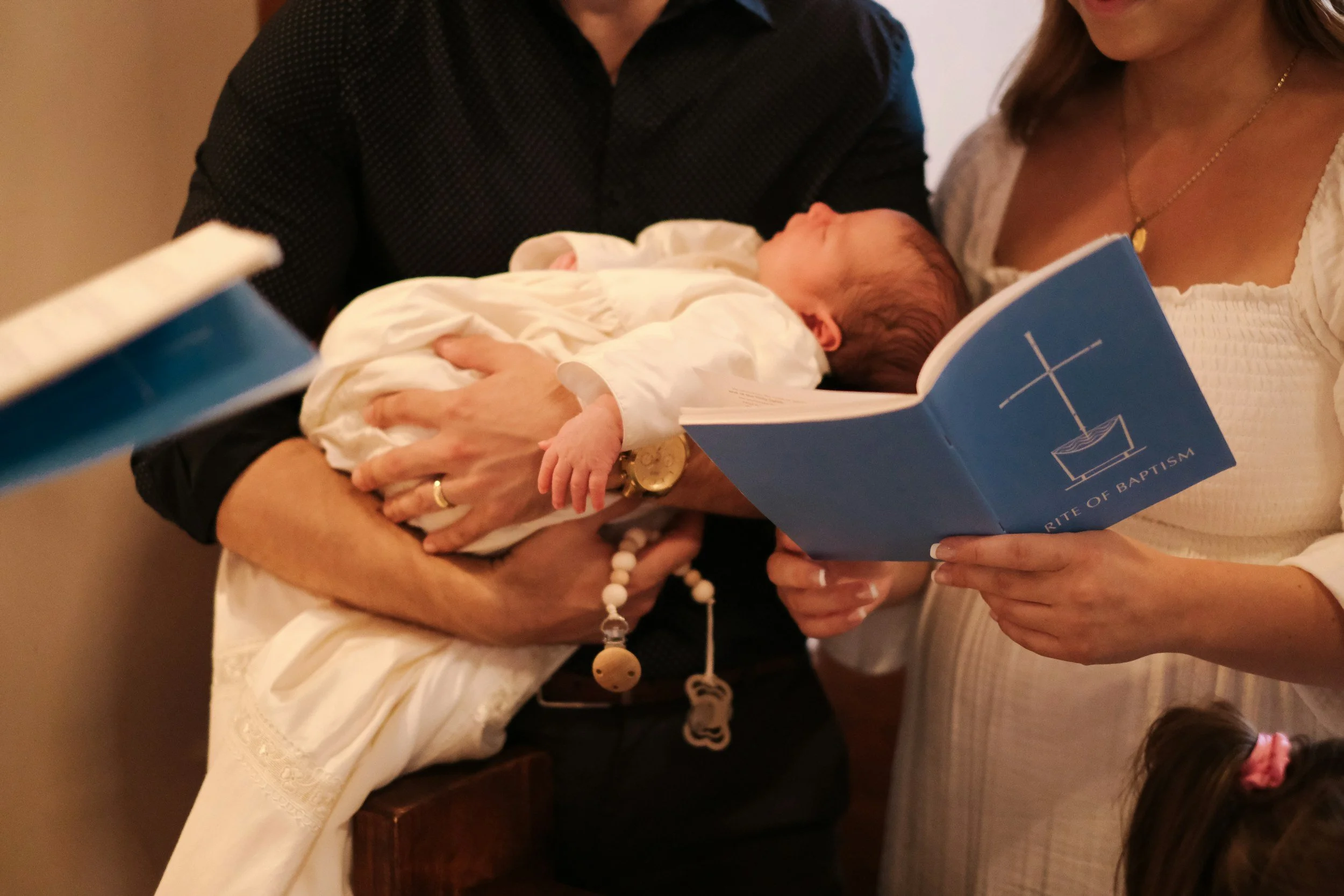
After the service, I asked the pastor whether I could have one of these booklets for myself. He explained that they were usually intended for young people preparing for Konfirmation (Confirmation). They use them to keep track of the church services they attend and to record details and reflections about each one.
I really liked the idea! I thought to myself: Why not use something similar? Not as someone taking part in the Confirmation programme, of course, but as a Muslim visitor who is interested in keeping track of his church visits and documenting his experiences.
I could record the date of each visit, the theme of the sermon, the Psalms that were read, the hymns that were sung, the ideas that caught my attention, and what I learned from each experience. In this way, every visit could become an opportunity for learning and reflection, while also creating a personal record of my journey towards understanding Christianity and its religious practices.
Interestingly, the booklet I photographed that day contained the handwritten word Vergebung, meaning forgiveness, as the theme of the sermon. It also referred to Psalm 130. These small details caught my attention and made me think about the religious concepts that could provide starting points for exploring both commonalities and differences between Islam and Christianity.
But the experience did not end there. An unexpected moment was still waiting for me!
Towards the end of the service, the pastor invited everyone to stand and come forward to receive Communion, sharing the bread and the cup in remembrance of the body and blood of Christ, according to Christian belief.
He explained that there were two options for the drink: wine and apple juice. As the bread was distributed, the minister offered it to each person with the words:
“Christi Leib, für dich gegeben.”
Meaning: “Christ’s body, given for you.”
I stepped forward and took the piece of bread. Almost instinctively, I found myself whispering:
بسم الله – Bismillah (In the name of God).
Then came the cup!
I noticed that everyone was drinking from it, and suddenly I began to hesitate. As a Muslim, I do not drink alcohol, and I certainly did not want to consume something that contradicted my religious beliefs or forget my religious identity while trying to experience another religious tradition.
At the same time, I did not want to hand the cup back untouched, especially as the person distributing it was making his way along the congregation, offering it to everyone.
So I decided to wait until he came past me again.
By then, the pastor had already seen me during the service. Perhaps he had also noticed the rather desperate expression in my eyes!
When he came closer, I quietly asked him:
“Ist das Saft?”
(Is it juice?)
He looked at me and replied:
“Ja, das ist Saft!”
(Yes, it is juice!)
And I said:
“Thank you!”
And just like that, my little dilemma was resolved!
Looking back, I find this moment rather amusing, and I cannot help smiling whenever I remember it. But I also think that this simple encounter captures something important about my experience that day.
I had entered the church out of curiosity and a genuine interest in understanding a different religious tradition. I wanted to experience and participate in the occasion as a visitor, without pretending to be someone I am not or compromising my own religious identity.
For me, interreligious dialogue does not mean abandoning our identities or beliefs. Rather, it means approaching others with openness, respect and genuine curiosity, learning about their traditions and practices while remaining true to ourselves and our convictions.
I also believe that interreligious dialogue should not be limited to academic conferences, seminars or theological debates. It can begin by taking part in other people's everyday religious lives, visiting their places of worship, listening to their prayers, observing their rituals and asking simple questions that help us understand their religious and human worlds.
The little booklet used by the young people also gave me an idea: perhaps I should start keeping my own record of church visits and experiences. Maybe this visit will be the beginning of a series of encounters through which I can learn more about Christianity, not only from books but also through direct interaction with believers and their religious practices.
Sometimes, an encounter between religions does not require complicated theological discussions or lengthy debates about differences in belief. Sometimes, it begins with a piece of bread, a whispered Bismillah, a little booklet for taking notes, and one very simple question:
“Is it juice?”
Thank you to everyone who reads with interest and remains open-minded – it truly means a lot to me. Feel free to share your thoughts and experiences; I look forward to the exchange! 🙂 Ma’assalama (goodbye) 🌙✨
P.S. The text was corrected with the help of AI, but the content and ideas are entirely my own.
Ragab Kamal Abouhalima, Philipps-Universität Marburg. Germany
Ragab Kamal Abouhalima

A Muslim’s first-hand experience of All Saints’ Day, exploring Christian traditions, religious identity, and the little moments that make interreligious dialogue meaningful.